
JENNIFER PRETZEUS (NM)
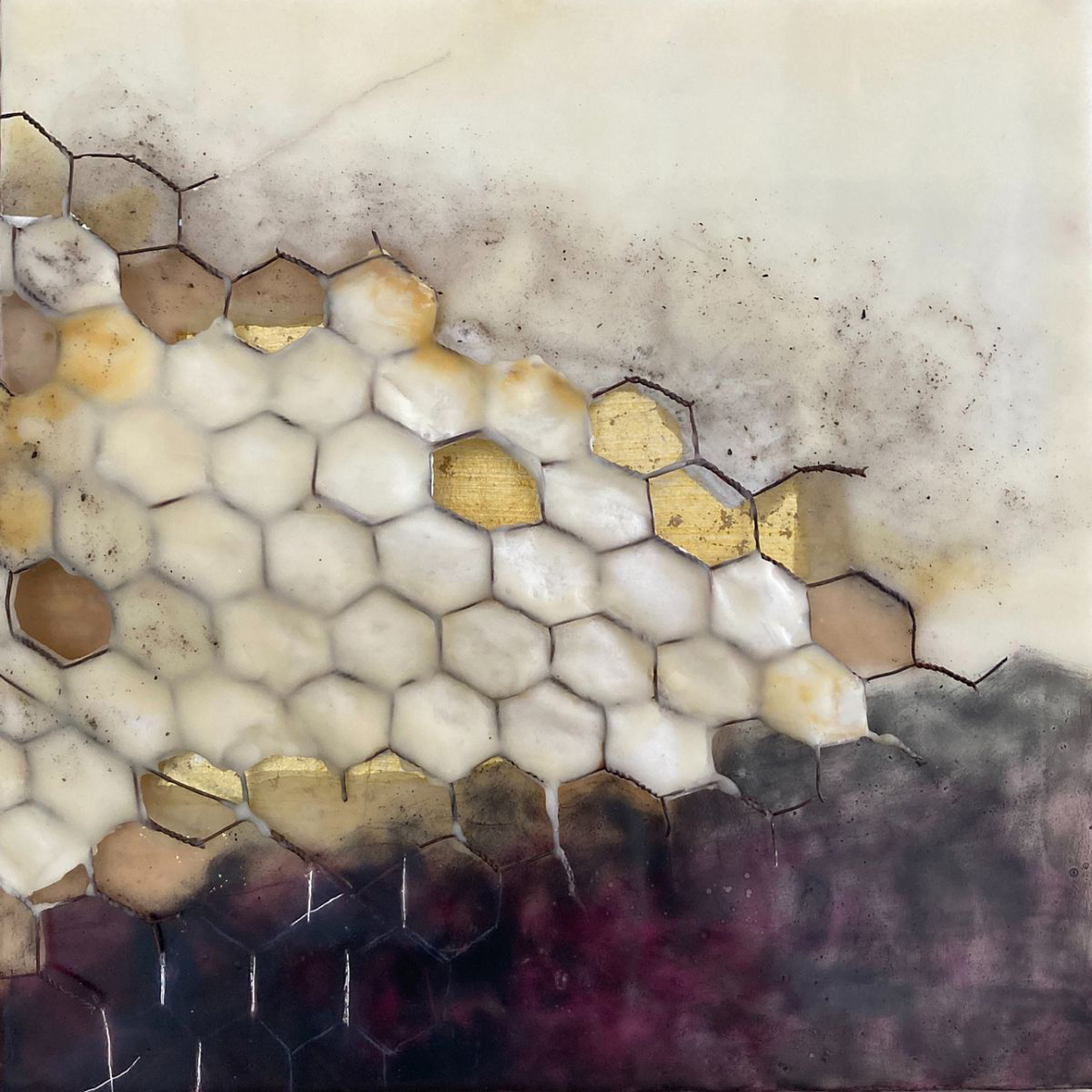
The Last Hive, encaustic, wire, ash, charcoal, pastel, joss paper on board, 12 x 12 inches

ARTIST STATEMENT:
We have bees and other pollinators to thank for about 1 out of every 3 bites of food we take. Globally, 75% of crops which produce fruits or seeds for human consumption depend on pollinators. In the U.S., honeybees alone pollinate $15 billion worth of crops each year.
Due to climate change, populations of bees and other pollinators are steeply declining in many parts of the world, with recent figures suggesting by as much as 30% per year. Over 10 million hives disappeared from 2014-2017.
Bees are severely vulnerable to extreme weather, and climate change has caused flowers to emerge and bloom earlier. This creates a potential mismatch between the period when flowers produce pollen and the time when bees are ready to feed on that pollen. Even a small difference of 3 to 6 days can mean they are unable to pollinate flowers and, therefore, do not obtain nectar for their hives to use during the harsh winter months. This also makes them less likely to reproduce.
Bees are also extremely susceptible to certain mites and gut parasites. These parasites have been steadily increasing due to warming weather conditions, which is leading to shorter lifespans and colony collapse. Already impacted by habitat loss as native vegetation is being replaced by our ever-expanding human sprawl, bees’ territory is also shrinking as they have fewer cooler areas to migrate to in order to establish new hives.
If these pollinators continue to decline, further damage will be inflicted on our food industry as quantity decreases and healthy food becomes more expensive as a result. The incorporation of ash in this piece is symbolic of the bees’ decline, while Chinese joss paper, traditionally used as an offering to deities, recognizes their contributions as one of the most important pollinators in the world.
The image below offers a view of The Last Hive in situ to help to visualize this piece in a home setting.

Click here to return to main Global Warming is REAL page